Connecting With Your Ideal Customer
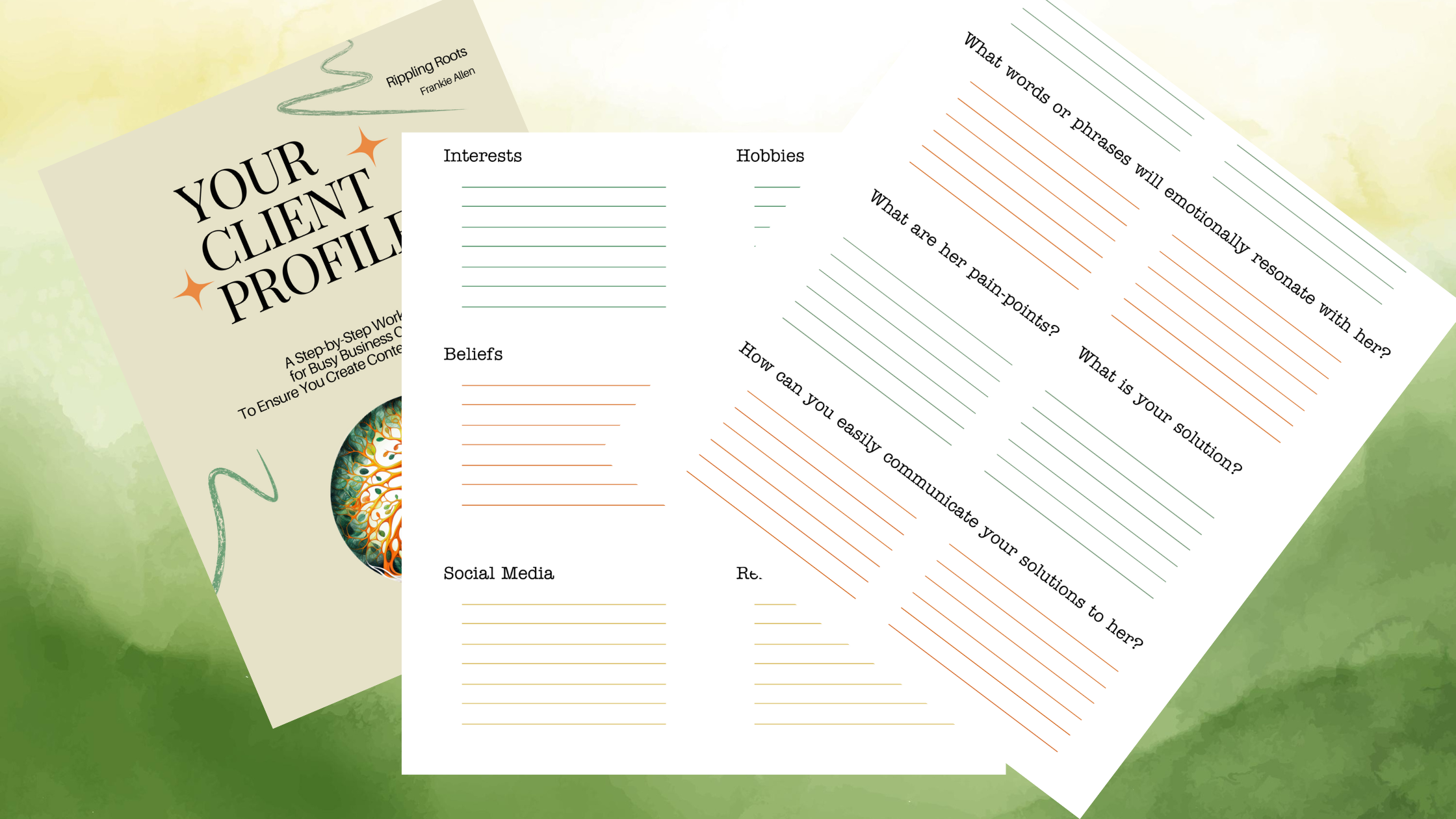
Thanks for coming back and joining me on this Ideal Customer Profile journey! I can’t tell you how glad I am that you’re taking the time to work on this. It helps me help you faster and better when you already know who you’re serving, why, and how you connect.
Earlier, we discussed why your Ideal Customer Profile is so important and how to gather your demographics from the information you already have. Today, we’re discussing why you need the psychographics, how to pull that information from past conversations, and how to gather what you don’t have.
The Importance of Psychographics
Psychographics is the study of how people relate to each other based on their aspirations, interests, and other psychological information. In other words, this is how you relate to people. I have a hard to relating to people who love cars, but I can easily relate to people who read science fiction. I have a hard time relating to people who hunt, but I have a super easy time relating to people who like to forage. I’m not a big dog person. I’m a cat person. The list goes on and on.
A lot of times, most of this stuff doesn’t come up in our pointed conversation about the project, but they will come up as we’re talking to one another as people. It relates back to the Know, Like, and Trust model of relationship building. If you know, like, and trust someone, it helps you not only work with them, but to build a rapport with greater return.
The way to build that is by getting to know a little bit more about them, and this goes into the psychographic portion of your Client Profile Workbook.
Interests and Hobbies
As we go through this, it’s important to remember that we’re trying to stay as close to your services as possible. However, in interests and hobbies, that can be a pretty broad brush. Let’s say your idea client is interested in crochet, I can come up with ways for electrical contractor tie that into a blog post about lighting. Let’s say your ideal customer is interested in playing pool. I can come with a blog post idea about how creating content is like setting up different shots.
As you’re building your content plan, you’ll be looking for broad topics where you can refer to their interest and relate it to the service you provide.
Needs and Dreams
Sometimes, these two things are in conflict with one another, and sometimes they tie in nicely with each other. Write down what your ideal customer wants, needs, and dreams about. You’re going to be looking for topics where you can address those and showcase your expert-level experience about them.
Motivations, Goals, and Priorities
Where is your ideal customer going and how is she getting herself there? How can you help her get to where she needs to go? Your goal, for instance, is to grow your business and you want to do that as efficiently as possible. I can help you with content strategy, but the first step is creating this profile. I am giving you the information to do it yourself, but I can also help by doing it for you. I know that you’re at a point where money is a deciding factor, which is the reason I’m giving you this information and the strategy behind it for free. I’d rather you spend your money on the things you can’t do easily, strategize.
That’s the connection you’re looking for in these sections of the Ideal Customer Profile Workbook.
The rest of the workbook is pretty easy to follow, and the strategy is simple. What topics can you discuss in blog posts, in social media, or in emails and flyers to connect and reconnect with your ideal customer?
What happens if you don’t have this information, though? You can do one of two things.
Call And Ask
Customers are funny. They like it when you find out more about them. Half of relationship management is getting to know who you serve. Don’t assume they’re going to get defensive if you call them and start asking questions. If they do, are they truly your ideal customer?
When you talk to them, let them know you’re looking at the growth of your business and you want to shape it so that it best supports their needs. Now, their first reaction is going to be to tell you that they’re not going to financially support you. Let them know what you enjoyed the most about your previous experience working with them. Give them a five star review, and then let them know that you’re looking for more people like them because serving them brings you joy.
Surveys Are Easy
The best way to get this information, however, is to put it in a survey. Some of your service management software will actually have the ability to send surveys. However, if you don’t have that ability, then use Google Forms or Microsoft Forms. This is a great way to ask multiple questions, and get a higher quality of answers.
Be honest with them, like I said with the phone calls. And, if you’re sending this via email, offer them an incentive. A 10% off coupon on their next service doesn’t hurt you and it goes a long way to showing your ideal customer just how much you value them. If they’re insulted by a measly 10%, then they’re not your ideal customer. So, use it to weed out the bad ones.
Putting It all Together
Now that you have all the information to create your Ideal Customer Profile, it’s time to study it. How close are you to serving them the way they need? What other services could you provide? What do they want that you’re not already doing? What additional information can you provide to build and nurture that relationship?
Creating a content plan to manage your customer relationship is easy when you know what your ideal customer needs, wants, and what’s holding them back. Get to know your ideal customer. Get her to like you by liking her first, and build her trust by understanding her needs and providing her with value so she can live her life the best she can. In so doing, she’ll help you serve the community in the way you’ve always dreamed of.