What Happens When Your Business Is Failing?
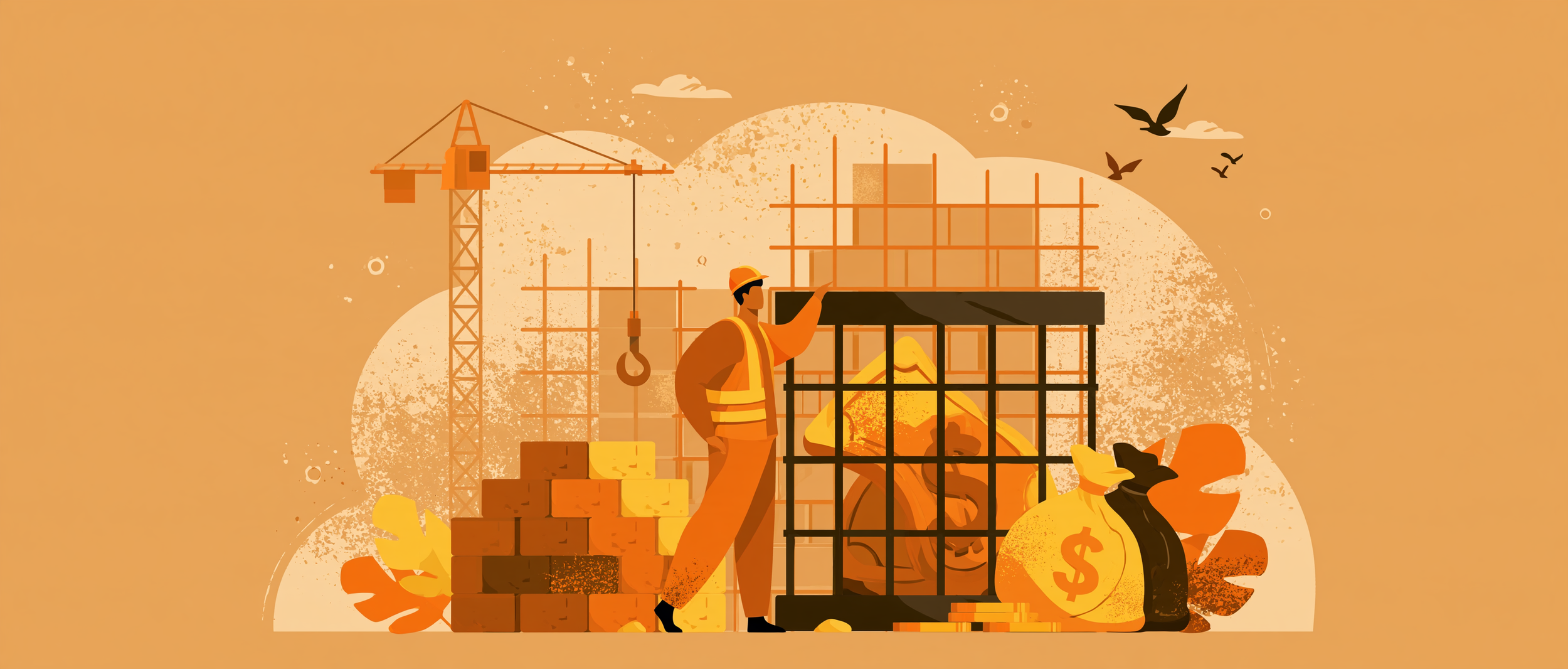
When people say their business is failing, what they usually mean is: "I'm exhausted and nothing is working."
And when a contractor says it, nine times out of ten there's a more specific thing underneath. The money isn't coming in. Work got done, and somehow you still can't make payroll.
That's not a failing business. That's a stuck one. Those are different problems with different fixes, and the second one is a whole lot easier to solve than you think right now.
Hear me out.
The hamster wheel keeps churning
I've been there, and I've watched plenty of other businesses get there too.
You keep working harder without moving forward. You keep chasing customers who won't pay their invoice and complain about the service while they're at it. You keep fixing things only to find more things broken behind them, like bad pipes in an 80s house.
Every win gets followed by another fire.
And somewhere around 2 a.m., you wonder if you were stupid for starting a business in the first place.
Here's what that actually looks like, and I bet you recognize most of this list:
Unpaid invoices sitting 60, 90, 120 days out
Bills you can't pay because you're waiting to get paid
Payroll you're covering out of your own pocket, which sucks, by the way
Angry customers
Angry crews
A messy office and messier trucks
Sleepless nights, tightness in your chest, waking up in a panic
That's not a sign you suck at business. It's a sign the money has gotten stuck somewhere between the work and the bank account. Usually in five specific places.
Where the money actually gets stuck
1. Work you did and never billed. This is the biggest one and the one nobody wants to hear. Change orders done on a handshake. Extra work a superintendent asked for in the field that nobody wrote down. T&M tickets never signed. You did the work, you paid for the labor and the material, and it never made it onto an invoice. That money isn't late. It's gone, and you're the one who paid for it.
2. Work you billed wrong. The pay app went in and came back. Wrong format, missing lien waivers, backup that didn't match the schedule of values, certified payroll not attached. Now you're 30 days behind on money you already earned, and you get to resubmit during the same week you're trying to run four jobs.
3. Work you billed correctly that's just slow. This one isn't anybody's fault, and it still sinks contractors. Your pay app goes in on the 25th, the GC bills the owner, the owner pays in 30, then the GC pays you. If your contract has a pay-when-paid clause, you're at the end of a chain you don't control. That's 45 to 60 days on good jobs. If you bid the work assuming you'd see money in three weeks, you're going to be short, and being short has nothing to do with whether the job was profitable.
4. Money parked at the end. Retainage. Five or ten percent of every invoice, held back until the job closes out. On a decent year, that's a serious pile of your profit sitting in somebody else's account, and it doesn't come loose until your closeout package is complete. Punch list signed, as-builts submitted, O&M manuals delivered, warranties turned in, final lien waivers. Most contractors lose months here because closeout is the paperwork everyone abandons the second the crew rolls off.
5. Money you're never getting. Disputed change orders with nothing in writing. Delay claims where you never sent notice. Backcharges you can't fight because you don't have daily reports. This is where "difficult customer" and "bad paperwork" become the same problem.
Notice something about that list. Only one of those five is really about who your customer is. The other four are documentation.
"Take what you can get" is a starting tactic, not a strategy
When you're starting out, you build with the tools you have and the customers you can get. Of course you do. You need reviews. You need references. You need to prove you can do the work.
But that mentality is a short-term play. It's meant to teach you what kind of work you actually want: which jobs you enjoy, which systems you tolerate versus love, how you want to deal with customers. What can you repeat a thousand times and get good at?
That's what it's for. It's not a foundation.
The moment it stops serving you is usually the moment cash gets tight, because the customers who'll hire anybody are the same ones who'll pay whenever they feel like it.
What changes when the paperwork is right
Let me paint a different picture.
Your change orders get written down and signed before the work happens. So when you bill for them, nobody argues, because there's nothing to argue about.
Your pay app goes in on the same day every month, with backup already formatted the way that GC wants it. It gets approved the first time. The person in that office who processes it starts to like you, which matters more than anybody tells you.
You know what retainage you're holding across every job, so it stops being a surprise and starts being a number you can plan around.
Your closeout package gets assembled as the job runs instead of six weeks after the crew leaves. Final payment comes in weeks, not quarters.
And when somebody tries to backcharge you, you have daily reports and photos and an email with a date on it.
That's not a personality change. That's a documentation habit, and it's learnable.
You're not behind. You're at a turning point.
Sounds cheesy. It's still true.
Some business owners genuinely are the problem. If you're reading an article about why your money is stuck at 11 at night, you're probably not one of them. You're a good contractor with a paperwork gap, and that gap is costing you real money every single month.
Start here, this week: pull your last three months of jobs and find every piece of work you did that never got billed. Not the invoices that are late. The work that never made it onto an invoice at all.
Most contractors find something. A lot of them find enough to cover a payroll.
Then fix the process that let it happen, because it will happen again next month otherwise.
FAQs
Why can't I make payroll when my jobs are profitable? Usually a timing problem, not a profit problem. Between pay-when-paid clauses, 30-day owner payment cycles, and retainage, money can sit 45 to 90 days behind the work. Profitable jobs can absolutely run you out of cash if you didn't plan the gap.
What's the most common reason a pay application gets rejected? Incomplete or mismatched backup. The schedule of values doesn't line up, lien waivers are missing, certified payroll isn't attached, or the format isn't what that GC requires. Almost all of it is preventable, and every rejection costs you about 30 days.
How do I collect retainage faster? Finish closeout while the job is still running. Retainage is usually released after the closeout package is accepted, so as-builts, O&M manuals, warranties, punch list sign-off, and final lien waivers are what's actually holding your money.
What if I did the work but never got a signed change order? It gets much harder, and it depends on your contract and your state. This is why written authorization before the work is worth the awkward conversation every time. Going forward, a same-day email confirming what was asked for and what it'll cost is better than nothing.
Frankie Allen spent 30 years in construction, from drafter to journeyman electrician to project manager on residential, commercial, hospital, and federal jobs. Rippling Roots provides fractional assistant project management to contractors in Alaska, Hawaii, and the Western U.S.